yushaleads@gmail.com
 How Artificial
Intelligence Is Improving Educational Centers

(ML) are key drivers of growth and innovation in every industry, and this is no
different in the education sector. Artificial Intelligence (AI) has made
significant inroads into a wide range of industries since its early days of
robots and voice-activated machines. Artificial intelligence has indeed served
to amplify the toil of those who put in the hours. This allows educators to
focus on developing engaging and challenging curricula while automating much of
the back-end support work for them. AI tools have also helped to refocus
attention on accessibility. According to the eLearning Industry, as many as 60%
of learning management tools will be equipped with AI capabilities in the next
five years. While AI-powered solutions have been around for some time, the
education technology industry has been slow to adopt them.” Teachers were
forced to rely on technology for virtual learning because of the pandemic and when
it comes to technology in education, 87% of educators agree to the extent that Artificial
intelligence in education can be used to improve educational outcomes. As
a starting point, let’s take a look at how these tools are currently being used
to support educational institutions’ efforts to make learning more accessible.
It’s also critical to begin by asking the appropriate questions. What are some
educational applications of artificial intelligence? What aspects of human
cognition are being omitted in the development of machine learning algorithms?
Is there a way to incorporate AI into educational workflows that is more
convenient for students? There are many ways that artificial intelligence (AI) can be used to improve education
for both students and teachers.
In what ways AI is being used in the classrooms?
Over the last few years,
online education has become more and more commonplace. However, they aren’t the
only ones who benefit from technological aid. Anti-plagiarism programs like
Grammarly, word tune, and Turnitin have been widely used by instructors for
years. Professors don’t want students to be caught plagiarizing each other’s
work. To counteract plagiarism, some new teaching technologies are being
developed ahead of time. Let’s take a step back and remember that everyone
learns differently. Some students learn best through auditory means, and others
learn best through reading. Most professors already use presentations and
speaking, so readers are left out. Using a voice-to-text program, professors
can turn their lectures into a transcript. Students are encouraged to read ahead
of time and come prepared with questions, or they can follow along and take
notes during the lecture and not just list the lecture verbatim. It’s
impossible to overstate how much technology has changed education. Artificial
intelligence (AI) can assist in testing in a manner like plagiarism this can be
done with the help of natural language processing (NLP). For even more
time-saving benefits, you could instead simply insert the scanner into the
scanner machine! Educators hope that artificial intelligence in the classroom
will make their workdays more efficient while also providing students with
timely feedback.

How is AI Convenient for Students.
To put it another way, a
student’s goal is simple, get an academic credential. AI can make it easier for
students to achieve their educational goals by speeding up the learning
process. With the right courses, better teacher-student communication, and more
time for other activities, AI can have a significant impact on students’
educational journeys. Below are some benefits.
Personalization
One of the hottest topics
in education right now is the idea of tailoring instruction to each student’s
unique needs. Students are now able to learn in a way that is tailored to their
own unique experiences and preferences thanks to the use of AI. Artificial
intelligence (AI) can adjust to the specific needs of each student, considering
their current level of knowledge, learning rate, and desired to learn outcomes.
Artificial intelligence (AI)-driven solutions can also analyze students’
previous learning histories to identify weaknesses and recommend courses that
are best suited for improvement, providing numerous opportunities for a
personalized learning experience.
Coaching
Because of their busy schedules, many teachers can’t
accommodate students who need extra help after school-homeschooling or on
weekends. In these cases, AI tutors and chatbots are the ideal solutions.
Although Chatbots cannot replace teachers, AI tools can help students improve
their weaknesses outside of the classroom. A one-on-one learning experience
without the teacher is available at all hours of the day with the help of AI.
Student questions can be answered in as little as 5 seconds by an AI-powered
chatbot.
Prompt response
When you ask a question
and get an answer three days later, it’s frustrating. Daily, teachers and
faculty members are bombarded with the same questions. Student questions can be
answered in a matter of seconds using support automation and conversational intelligence
provided by AI. This not only saves teachers a great deal of time but also
makes it easier for students to find answers to their questions.
Constant Support
Students can learn at any
time and from any location thanks to AI-powered tools. 24/7 access makes it
easier for students to discover what works best for them without having to wait
for an instructor’s approval. As a result, students from all over the world can
gain access to high-quality education without incurring travel or living
expenses.

How is AI Convenient for Teachers
Time management is a
problem for most teachers and faculty members, which is understandable given
the number of tasks they have on their daily to-do lists. While teachers would
like to spend additional time with students, conducting research, and
furthering their education, they simply do not have the time to do so. By
automating tasks, analyzing student performance, and closing the educational
gap, AI can free up educators’ time and help them better serve their students.
Personalization
In the same way that AI can personalize students’ distance learning
courses, it can do the same for teachers. Artificial Intelligence (AI) can help
teachers identify the subjects and lessons that need to be revisited. Teachers
can use this information to design the best educational program for each
student. To keep students from falling behind, teachers and professors must
analyze each student’s specific needs and adjust their courses to address the
most common knowledge gaps or challenge areas.
Task Automation
It is possible to
automate mundane tasks such as grading papers and testing learning patterns by
using AI’s power of computation. Teachers spend 40% of their time planning
lessons, grading tests, and doing administrative work, according to a Telegraph
survey. Teachers, on the other hand, can use support automation tools to
automate manual processes, allowing them to devote more time to teaching core
skills.
Response to Queries
AI-powered chatbots can answer a wide range of generic and repetitive questions students commonly ask without involving a faculty member because they have access to the entire school’s knowledge database. Artificial intelligence frees up time for educators to work on other aspects of their jobs, such as lesson planning, curriculum development, and student engagement.
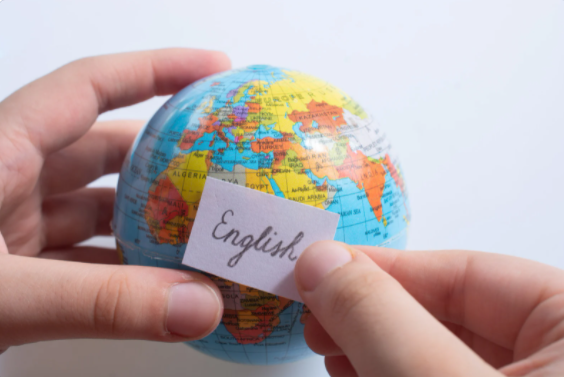
AI On A Global Level
The language barrier is
an aspect of accessibility that is frequently overlooked. Technology has made
the world smaller and more interconnected than it ever was. If you don’t speak
the language, it’s difficult to get your point across. Students often travel to
other countries to gain access to more resources and research. Educators can
provide subtitles or real-time captions to their students to aid in their
understanding. As English content spreads around the world, so does the
reverse. Pre-recorded content is another way that more people around the world
are getting access to education. Everyone is not in the same time zone, so not
everyone can listen in on a live lecture. In addition to providing transcripts,
teachers now have the option of providing videos with subtitles for their
asynchronous students. Reading and listening to a foreign language together
helps you learn it more quickly.
Future of AI in the Educational Sector
When it comes to
smartphones and other household appliances, voice-to-text has become a common
feature. But what if we went further than just setting timers and ordering
food? Using machine learning, speech to text (STT) solutions can be utilized.
Technologies like natural language processing (NLP) and automatic voice
recognition (ASR) can have a significant impact on the way students’ study and
do their research. ASR technology can automatically generate transcripts of any
audio or video by transforming the spoken word to text. Summarization, theme
extraction and tracking of student participation are all possible uses for NLP
in the classroom. With technology in the educational sector, you can gain
access to a wide range of information. Higher education teaches students to
specialize and narrow their interests. AI can draw on a greater range of
information when machine learning is used to augment lectures. Adding value to
education can be done seamlessly. Even when artificial intelligence is used in
teaching, accuracy is crucial. Even with the help of machine intelligence,
instructors are constantly striving to produce challenging and original
information. Please ensure that the intended quality of this material is
maintained. Using an STT supplier like Rev, you are guaranteed 99% correctness
in your transcripts, captions, and subtitles.
Conclusion
There has been a Five to ten-fold
increase in educational technology in the last decade. Learning and teaching
can be made more efficient and effective with the use of artificial
intelligence (AI). Students and instructors alike will benefit from AI’s growth
and innovation, which will lead to better learning outcomes for everyone.
About the Author
Huma Haroon is a Chemistry Teacher in
Army Public School and College (APSACS-Pakistan) she has been in the teaching field
from Last around 10years.
Huma Haroon
(adsbygoogle = window.adsbygoogle || []).push({});

 yushaleads@gmail.com